How Does a Checkweigher Work? Understanding the Weighing Process
Accurate product weighing is essential across many industries, particularly where businesses need to maintain consistent product weights and meet specific requirements. From food and drink production to pharmaceutical manufacturing, even small weight discrepancies can affect product quality and lead to unnecessary waste.
But how do businesses quickly and accurately check the weight of individual products during production? This is where checkweighers play an important role.
In this guide, we explore what checkweighers are, why they are important, how a checkweigher works, and the different types available from John White & Son to support industrial weighing processes.
Key Takeaways
Checkweighers measure individual product weights against specified limits, helping businesses maintain product consistency, improve quality control, reduce product waste, support compliance, and improve production monitoring and operational efficiency.
Checkweighers weigh individual products, compare their weights against predetermined limits, and identify underweight or overweight items for further action.
John White & Son supplies static and dynamic checkweighers, as well as diverter systems, to support different industrial weighing and production requirements.
What Is a Checkweigher?
A checkweigher is a weighing system designed to check the weight of individual products against specified weight requirements.
Commonly used in food and drink production, pharmaceutical manufacturing, and packaging, checkweighers help businesses identify products that are either underweight or overweight before they leave the production process.
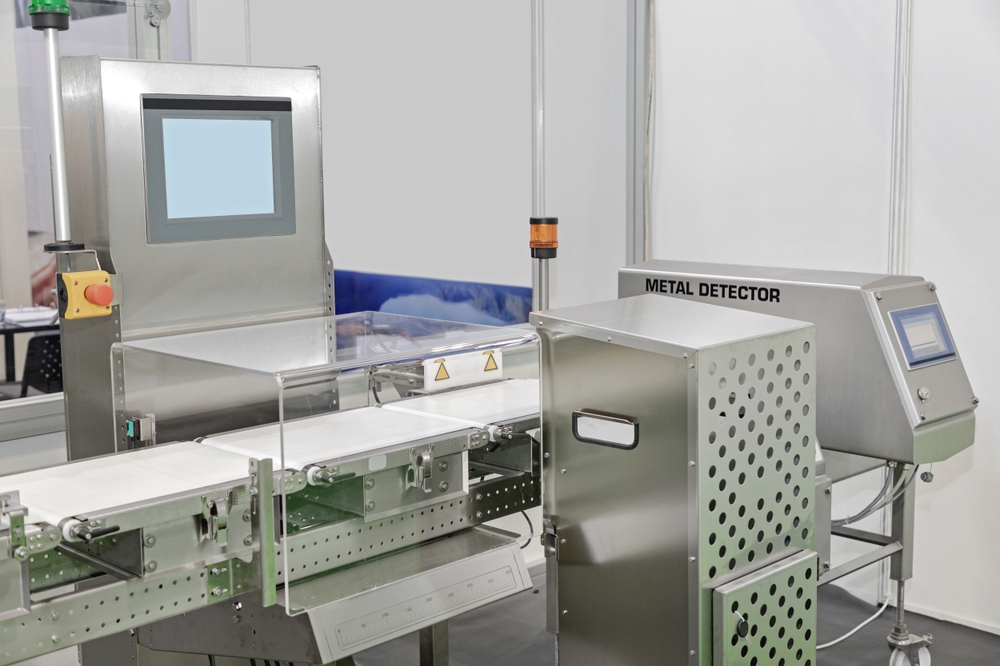
Unlike standard weighing scales, which simply measure and display an item’s weight, checkweighers are designed to assess whether a product meets a predetermined weight range. There are two main types: static checkweighers, which weigh products individually while they remain stationary on a weighing platform, and dynamic checkweighers, which weigh products automatically as they move along a production line.
Both allow businesses to monitor product weights, identify discrepancies, and maintain consistent quality across their operations.
What Are the Benefits of Using a Checkweigher?
Using a checkweigher offers several practical advantages for businesses handling products that need to meet specific weight requirements. From reducing unnecessary product giveaway to supporting quality control, some of the key benefits include:
| Benefit | Description |
|---|---|
| Product Consistency and Quality Control | Checking individual product weights helps businesses identify underweight and overweight items, maintain consistent standards across production batches, and prevent products that fall outside the required weight range from reaching customers. |
| Reduced Product Waste | Identifying overweight products can help businesses reduce unnecessary product giveaway, while detecting underweight items helps prevent products from falling below their required weight. |
| Compliance | Checkweighers support businesses in monitoring product weights against relevant legal and industry requirements, helping them maintain appropriate weighing standards. |
| Improved Production Monitoring | Checkweighing can help businesses identify recurring weight discrepancies and monitor how consistently products meet their target weights. This provides useful information for reviewing and adjusting production processes. |
| Operational Efficiency | Dynamic checkweighers can weigh products automatically as they move along a production line, allowing weight checks to take place without stopping production. Static checkweighers also support efficient quality control by providing a dedicated way to check individual products. |
How Does the Checkweighing Process Work?
The way a checkweigher operates depends on whether it is a static or dynamic system. While both are designed to measure individual product weights against specified requirements, they use different methods to carry out these checks. The process generally involves the following stages.
1. Products Enter the Weighing System
The first stage involves placing the product onto the weighing equipment. With a static checkweigher, products are placed individually onto a stationary weighing platform, typically by an operator. Dynamic checkweighers work differently, using a conveyor system to transport products onto the weighing section as part of an ongoing production process.
2. The Product Is Weighed
Once in position, the checkweigher measures the product’s weight. Static systems take measurements while the product remains stationary on the weighing platform. Dynamic systems measure products as they move along the conveyor, allowing weights to be checked automatically without stopping the production line.
3. The Weight Is Compared Against Set Limits
The measured weight is then assessed against predetermined target weights and acceptable tolerances. This allows the system or operator to identify whether a product falls within the required weight range or is underweight or overweight. For dynamic systems, this assessment happens automatically, allowing products to be checked as they pass through the weighing equipment.
4. Products Are Accepted or Rejected
The final stage involves identifying products that fall outside the specified weight range and deciding what action needs to be taken.
With dynamic checkweighers, products that do not meet the required weight limits can be automatically removed from the production line using a suitable rejection mechanism. This may include a diverter system, which redirects products away from the main production flow.
With static checkweighers, the weight reading allows an operator to identify any discrepancies and remove or address products that do not meet the required specifications.
What Types of Checkweighers Does John White & Son Supply?
Different production environments have different weighing requirements, which is why choosing the right equipment is important. John White & Son supplies both static and dynamic checkweighers, alongside diverter systems that help manage products that fall outside specified weight limits.
Static Checkweighers
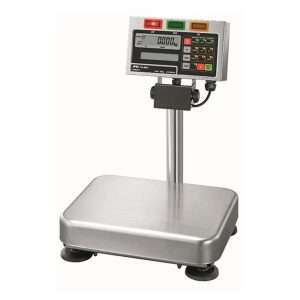
Static checkweighers are designed to weigh individual products while they remain stationary on a weighing platform. This provides a dedicated way to check product weights against specified requirements, without needing to move items along a conveyor system.
John White & Son’s static checkweigher is designed to fit into food production lines and features stainless steel construction with IP69K protection, making it suitable for environments requiring regular washdown. It offers a range of standard weighing capacities, from 300g to 150kg, with special capacities and platform sizes available on request.
Additional options include average weight legislation-compliant software, a column mount, and a traffic light display to help operators identify weighing results.
Dynamic Checkweighers
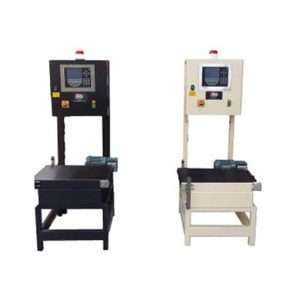
Unlike static systems, dynamic checkweighers weigh products automatically as they move through a production line. This allows businesses to check product weights without stopping the production process, making them particularly useful in high-volume manufacturing and packaging environments.
John White & Son supplies the JWS Cartomat dynamic checkweigher, which is particularly established in the drinks industry. It is used in the bottling halls of major UK spirit producers and can handle throughput of up to 60 cartons per minute, with a weighing capacity of 30kg.
The system also offers different carton rejection methods, including an external diverter or a belt stop and alarm, depending on the requirements of the production line.
Checkweigher Diverters
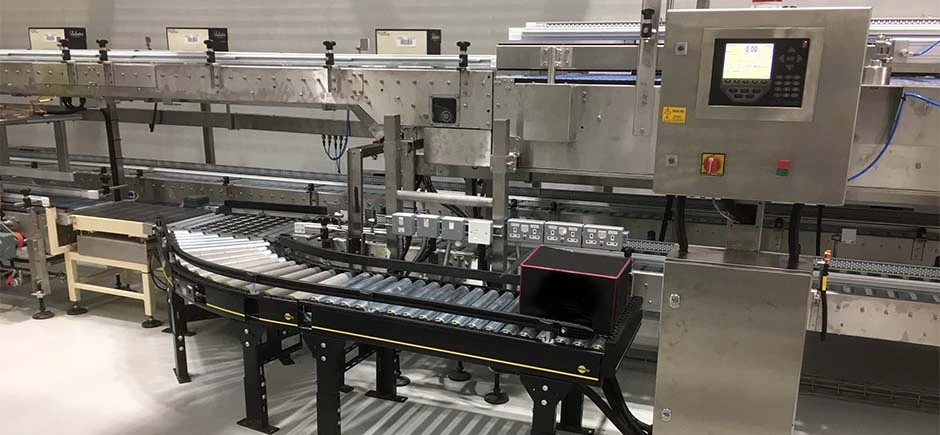
A checkweigher diverter is used alongside weighing equipment to redirect products that do not meet the required weight specifications. Rather than measuring product weight itself, it provides a way to remove rejected items from the main production flow after they have been checked by a checkweigher.
John White & Son’s checkweigher diverter uses powered wheels and rollers to transfer products at an angle, directing rejected items either to the front or rear of the system. The direction of the main product flow can also be configured from left to right or right to left, allowing the equipment to accommodate different production line layouts.
Find the Right Checkweigher Solution with John White & Son
With over 300 years of experience in precision weighing, John White & Son has the expertise to help businesses find the right checkweigher and other industrial weighing equipment for their production requirements. Founded in 1715, our company is ISO 9001 accredited, an approved self-verifier of Non-Automatic Weighing Instruments (NAWI), and an Approved SafeContractor member.
Whether you require a static or dynamic checkweigher, John White & Son can supply and integrate tailored industrial weighing solutions around your individual operational needs. Our support also extends beyond equipment supply, with services including weighing system design, installation, and commissioning to help ensure your weighing solution is ready to perform.
To find out more about John White & Son’s checkweigher solutions, get in touch with our friendly team today to discuss your requirements.